
Article Five of the North Atlantic Treaty Organization has been central to security and stability for nearly 80 years.
Let that sink in. EIGHTY YEARS.
More and more chatter in the news of late about this agreement.
Important to understand the basics at least, since it indeed fundamental to security and stability as it has existed since 1949.
Article 5
“The Parties agree that an armed attack against one or more of them in Europe or North America shall be considered an attack against them all and consequently they agree that, if such an armed attack occurs, each of them, in exercise of the right of individual or collective self-defence recognized by Article 51 of the Charter of the United Nations, will assist the Party or Parties so attacked by taking forthwith, individually and in concert with the other Parties, such action as it deems necessary, including the use of armed force, to restore and maintain the security of the North Atlantic area.
Any such armed attack and all measures taken as a result thereof shall immediately be reported to the Security Council. Such measures shall be terminated when the Security Council has taken the measures necessary to restore and maintain international peace and security.”
Collective defence is NATO’s most fundamental principle. Article 5 of the North Atlantic Treaty states that an armed attack against one NATO member shall be considered an attack against them all. Since 1949, this unwavering pledge has bound together a group of like-minded countries from Europe and North America, which have committed themselves to protecting each other in a spirit of solidarity.
- Article 5 of the North Atlantic Treaty states that an armed attack against one NATO member shall be considered an attack against all members, and triggers an obligation for each member to come to its assistance.
- This assistance may or may not involve the use of armed force, and can include any action that Allies deem necessary to restore and maintain the security of the North Atlantic area.
- NATO’s Article 5 is consistent with Article 51 of the United Nations Charter, which recognises that a state that is the victim of an armed attack has the inherent right to individual or collective self-defence, and may request others to come to its assistance. Within the NATO context, Article 5 translates this right of self-defence into a mutual assistance obligation.
- NATO invoked Article 5 for the first and only time in its history after the 9/11 terrorist attacks against the United States in 2001.
- While Article 5 itself has been applied only once, it underpins all of NATO’s broader activities in the field of deterrence and defence, including the regular conduct of military exercises and the deployment of NATO’s standing military forces.
- NATO takes a 360-degree approach to collective defence, protecting against all threats from all directions.
The origins of Article 5
On 4 April 1949, 12 countries from Europe and North America came together in Washington, D.C. to sign the North Atlantic Treaty. NATO’s founding treaty is not long – only 14 articles, just over 1,000 words – and its core purpose is clear and simple: a joint pledge by each country to assist the others if they come under attack.
This was particularly urgent in the early days of the Cold War. The Soviet Union had drawn the Iron Curtain across Europe, dominating its neighbours in Central and Eastern Europe and threatening to extend its control further west – unless it met with concerted resistance.
The 12 founding NATO Allies, many of them still rebuilding their economies and militaries after the devastation of the Second World War, agreed that uniting their strength and committing to protect each other was key to deterring the Soviet threat. Article 5 of the Washington Treaty was the clearest articulation of that promise, and it has remained the bedrock of the transatlantic bond at the heart of NATO ever since.
The North Atlantic Treaty was drafted four years after the adoption of the United Nations Charter in 1945. The Treaty makes explicit reference to the Charter no less than five times throughout its short text, including in its first sentence. Article 5 specifically notes that NATO Allies can take collective defence actions consistent with their rights under Article 51 of the UN Charter, which recognises that a state that sustains an armed attack has the inherent right of individual or collective self-defence, and may request others to come to its assistance. This right serves as a legal basis for taking internationally lawful military action in defence of the attacked.
This right to collective self-defence also permits states to conclude mutual defence arrangements on a bilateral or multilateral basis, in which they agree to come to each other’s assistance in case of a future armed attack. Such arrangements can exert an important deterrent effect against potential aggressors, as the example of NATO has illustrated for more than 75 years. While numerous mutual assistance obligations exist (for instance, the European Union and the Organization of American States also have collective defence treaty clauses), the degree of military coordination within NATO, and the Alliance’s collective military strength, render NATO’s Article 5 a uniquely powerful tool.
Article 5 states that if a NATO Ally sustains an armed attack, every other member of the Alliance will consider this as an armed attack against all members, and will take the actions it deems necessary to assist the attacked Ally.
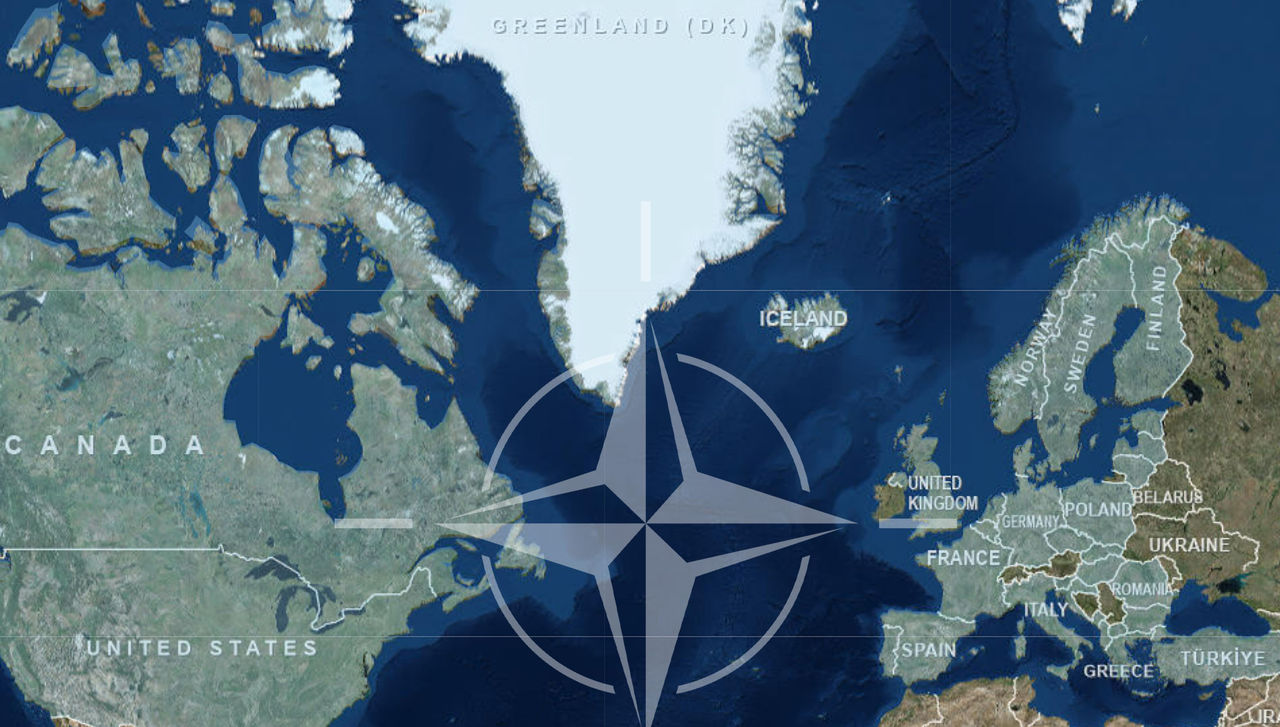
 1/2_Full, All GOOD